
Object histories · Object history · September 2026
The casserole that outlived the kitchen
Pyrex was a lab material that moved into American cupboards. The good pieces are still cheap if you know what you are looking at.
Corning did not invent colorful mixing bowls to decorate a farmhouse kitchen. It invented a glass that could take a flame. In 1915 that glass was laboratory ware. By the 1940s it was a nesting set on a Michigan counter, and by the 1970s it was the pattern your aunt still will not part with.
The name is a trademark. The material is borosilicate, later soda-lime. The story people actually buy is the pattern: Gooseberry, Butterprint, Friendship, Snowflake. Primary colors from the late 1940s. Earth tones from the 1970s. A lid that still seats.
What lasted
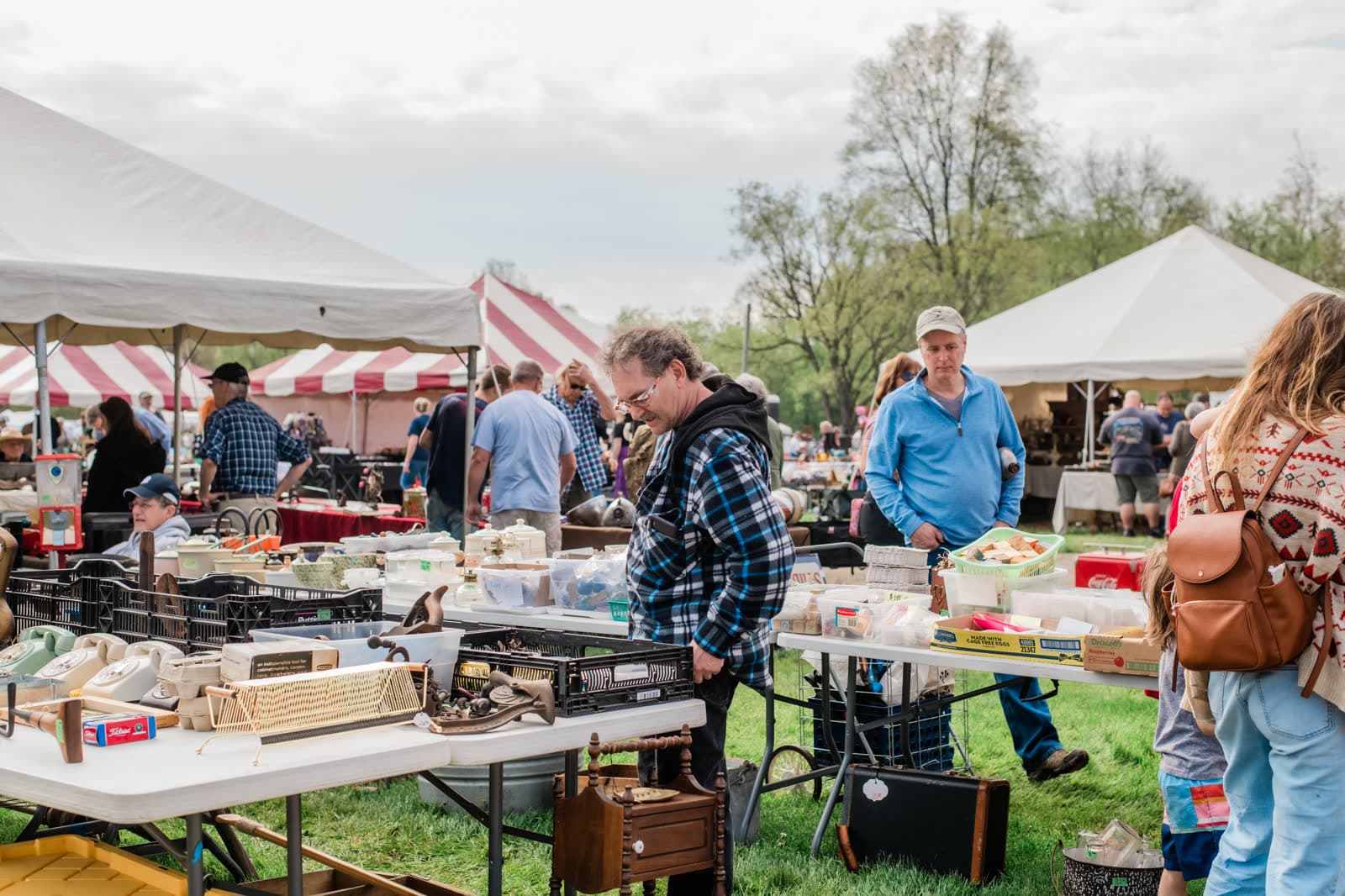
Pyrex survived because it worked. You could take it from icebox to oven. You could see the leftovers. When a kitchen got remodeled, the bowls went to the basement instead of the dump. That is why a festival table in Midland can still turn up a complete 400 series if you are willing to stack and look.
Opaline, milk glass, and later “vintage style” reproductions sit next to the real ones. The reproduction is not a crime. Paying original-money for it is.
How to pick one
- Turn it over. Older American pieces say PYREX in all caps, often with a model number. Newer “Pyrex” script is a different animal.
- Hold it to the light. Heavy scratches in the bowl are use. Heavy scratches through the paint are a problem if you are paying for the pattern.
- Lids matter. A casserole without its lid is still useful. It is not a complete piece. Price it that way.
- Smell the inside. A bowl that lived with onions can be cleaned. A bowl that lived with a crack cannot.
A good starter set is four nesting bowls in a pattern you would actually leave on a counter. Do not start with the rare colorway you saw in a screenshot. Start with the one you will wash.
At the festival, Pyrex lives on the kitchen tables, not the furniture rows. Walk slow. The complete set is often under the incomplete one.